Generative AI is a rapidly advancing field of artificial intelligence that has the potential to change the way we create and consume multimedia content.
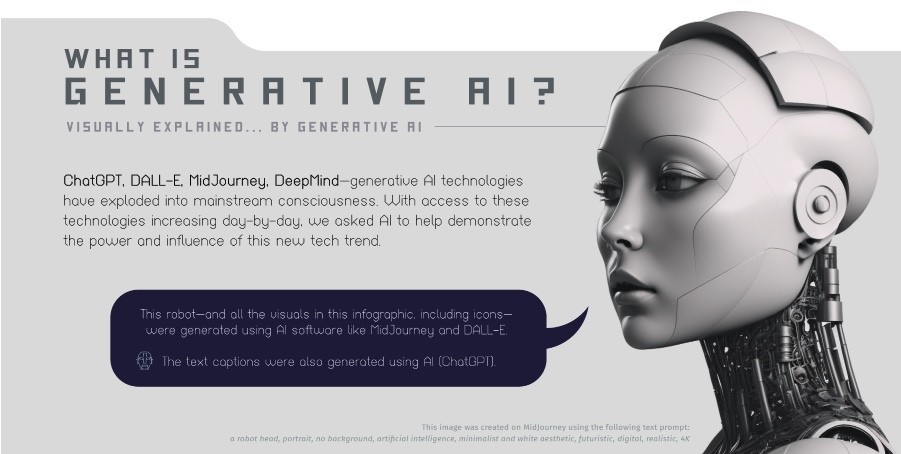
Infographic: Generative AI Explained by AI on Visual Capitalist
With the ability to generate new and original content, generative AI is poised to revolutionize the way we think about creative expression in fields such as art, music, and video production.
One of the most promising applications of generative AI is in the field of visual art.
Artists can use generative AI models to generate unique and original images and animations, which can then be used as a starting point for further artistic exploration. With the ability to generate large amounts of data quickly, artists can experiment with different styles and techniques, leading to new and exciting forms of artistic expression.
Similarly, generative AI is also changing the music industry.
Musicians can use generative AI models to create new and original compositions, melodies, and beats. These models can learn from existing music and generate new pieces that are similar in style and tone. This can help artists overcome creative blocks and provide a new source of inspiration for their work.
In the field of video production, generative AI can also play a significant role.
For example, video editors can use generative AI to create new and original special effects, animations, and transitions. This can help them save time and resources while creating stunning visual effects that would be difficult or impossible to achieve manually.
While the potential applications of generative AI are vast and varied, there are also some challenges to consider. One of the main challenges is the potential for bias in the generated content. Generative AI models learn from existing data, which means that if the data used to train the model is biased, the generated content may also be biased.
Another challenge is the ethical implications of using generative AI to create content that could be mistaken for human-made. For example, if a generative AI model creates a painting that is indistinguishable from one created by a human artist, who owns the copyright to that painting? These are important questions that need to be addressed as generative AI becomes more prevalent in the multimedia content creation industry.
Generative AI has the potential to change the way we create and consume multimedia content in profound ways. From art to music to video production, the possibilities are endless.
However, it is important to carefully consider the ethical implications of this technology and work to ensure that it is used in a responsible and unbiased way.


Latest news comments
AllThe Vega OS shift is the biggest Firestick story of 2026. Anyone buying now needs to know: 4K Max = sideloading works, plain 4K = ...
News: The New Fire TV Stick 4K Can't Run Kodi - Here's Which Fire Stick Still Can 3 commentsBrave just enabled it by default for stable users yesterday (1.97). Not specified is chromeOS will be passively gaining decode capability too, and ...
News: JPEG XL Is Back in Chrome: What It Means and How to Open JXL Files 2 commentsI didn't know it was EU, AND france. That doesn't sound like a good idea. Related to coding or privacy.
News: Meet Qwant: The Private, EU-Built Alternative to Google 1 comment