VLC plays Xvid out of the box - so when an old AVI refuses to play properly, a missing codec is the one thing it is not.
VLC carries its own decoders inside the program.
That covers Xvid, DivX and effectively everything else, on Windows, macOS and Linux alike.
Nothing to install. Open the file with VLC and it plays - there is no codec to download and no setting to change first.
Playing the file
- Open VLC, then choose Media and Open File.
- Browse to your Xvid AVI, select it and confirm.
- Playback starts on its own.
You can also drag the file onto the VLC window, or set VLC as the default program for AVI files so a double-click is enough.
Installing the Xvid codec will not help VLC
This is worth saying plainly, because it is the most common piece of advice on this subject and it is wrong.
VLC does not read the codecs Windows has registered. It uses the decoders built into the program, so a system codec install changes nothing about how VLC behaves.
The Xvid codec is for other programs. If a video editor, a capture tool or Windows itself needs to read the file, the Xvid Video Codec is the right install - our guide on whether you need the Xvid codec on Windows 11 covers when that applies.
It stutters, tears or shows blocky artefacts
Start here, because this is the most common Xvid complaint in VLC and it has a real fix.
Your graphics card has dedicated decoders for modern formats like H.264 and HEVC, but its handling of Xvid is inconsistent. When VLC hands the file to the GPU, the result can be juddering, tearing or blocky frames.
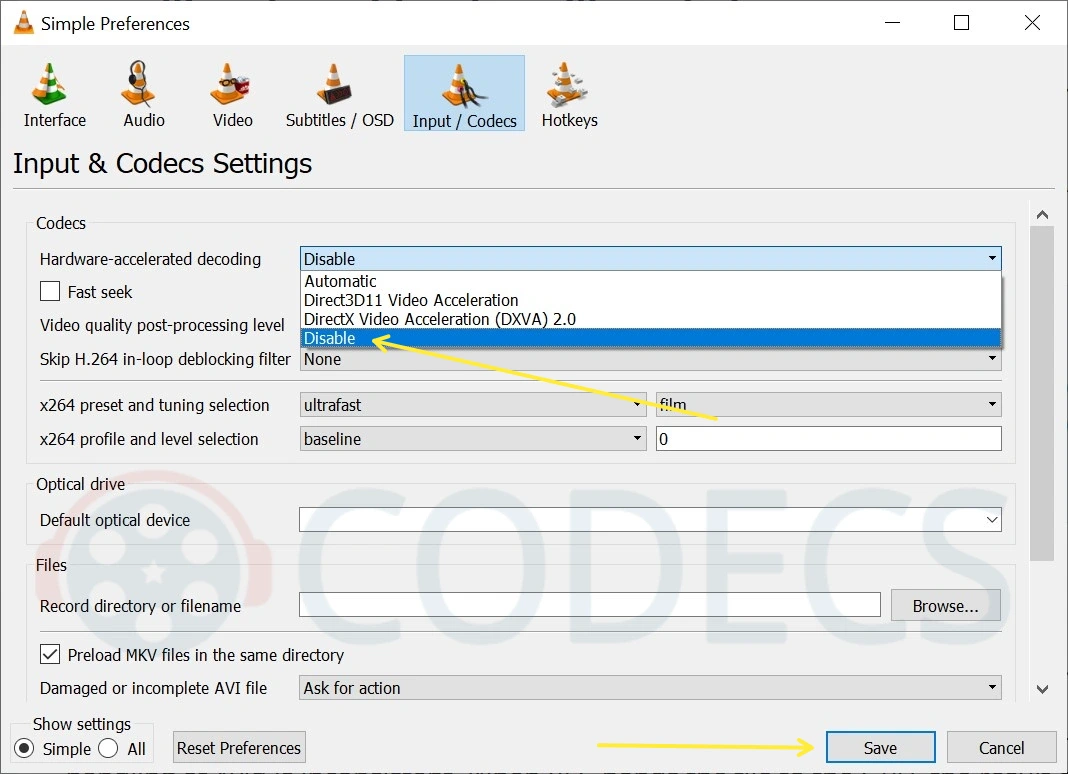
Go to Tools, Preferences, Input and Codecs, and set hardware-accelerated decoding to Disable. Restart VLC and play the file again.
Turn it back on afterwards if you like. Software decoding costs a little more battery and CPU, which matters for modern high-resolution video but is irrelevant for a 2000s AVI.
It will not open at all
Work down these in order.
- Check what the file actually is. Open Tools and Codec Information during playback - AVI is only a container, so the video inside may not be Xvid at all.
- Update VLC. Older builds occasionally struggle with unusual encodes that current ones handle without complaint.
- Reset your preferences. Tools, Preferences, then Reset Preferences at the bottom clears any setting that is quietly breaking playback.
- Suspect the file. If it fails at the same moment every time, or was never fully downloaded, no player will fix that.
The picture plays but there is no sound
On a desktop this is rarely a codec problem, because VLC decodes AC3, DTS and the rest as readily as it decodes the video.
Check the Audio menu first - many older AVI files carry more than one track, and VLC may have selected an empty or foreign-language one.
If the track list is empty, the file itself has no usable audio, and re-encoding will not invent any.
Converting it once instead
If the file needs to work on a phone, a TV or anything else that is not VLC, converting beats fighting each device in turn.
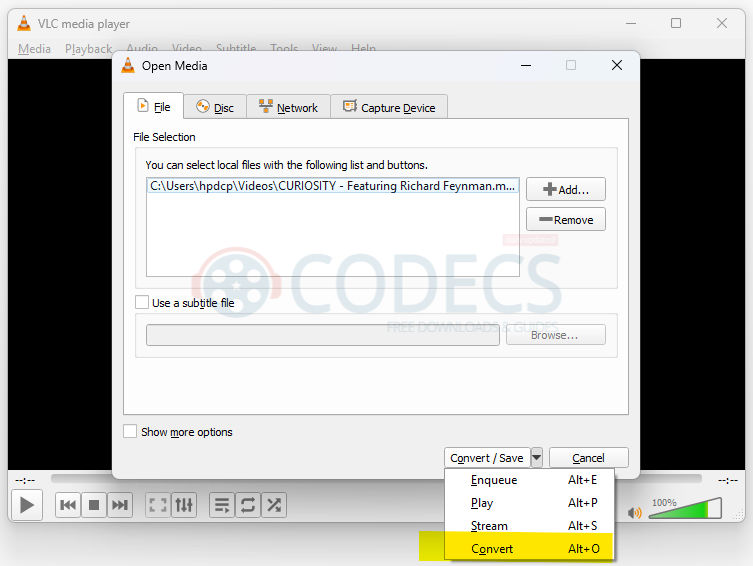
VLC does it natively through Media, then Convert and Save, keeping the default MP4 profile in the dialog that follows. Our guide on converting files with VLC walks through the whole process.
For a better result, HandBrake gives you real control over quality and produces a noticeably cleaner H.264 file from the same source.
Keep the original until you have checked the copy. Converting is lossy (the video is rebuilt from scratch, so a little quality is thrown away every time), and an Xvid file that already plays is worth more than a rushed re-encode of it.
Quick questions
Can VLC play Xvid files?
Yes, with nothing installed. VLC includes its own Xvid decoder on Windows, macOS and Linux.
Do I need to install the Xvid codec for VLC?
No, and it will not help. VLC ignores system codecs entirely and uses the decoders built into the program.
Why does my Xvid video stutter or look blocky in VLC?
Hardware-accelerated decoding is the usual cause. Set it to Disable under Tools, Preferences, Input and Codecs, then restart VLC.
How do I check which codec a file really uses?
Play it and open Tools, then Codec Information. VLC lists the actual video and audio streams, which often turn out not to be what the file extension suggested.
Should I convert my Xvid files to MP4?
Only if you need them somewhere VLC is not available. Converting is lossy, so a file that plays is best left as it is.
VLC opens the file but there is no audio. What now?
Check the Audio menu for other tracks, since older AVIs often carry several. An empty track list means the file has no usable audio at all.


How to Stream With VLC: Open a Stream URL or ...
5/5This is amazing! I could no longer afford cable so I cut the cord and started watching Hulu, Youtube, ...
Read More →Don't Open a .xmpeg File Before Reading This
3/5It's never a good sign when the potential malware you downloaded has the EXACT same filename as the example. ...
Read More →Free Popular IPTV Playlist: Where to Get Fres...
3/5How can you create a DSTV channels on IPTV?
Read More →